
Tale of the missing shelves
The weekly micro-decorating newsletter * Issue 10 of 13, SS26 * Subscribe free *
Once upon a time, late 2019 to be exact, I fell in love with a bookcase that felt exactly right for my small apartment. I spotted it in Toronto's CB2 and while my first impression was strong, it grew stronger on subsequent visits.
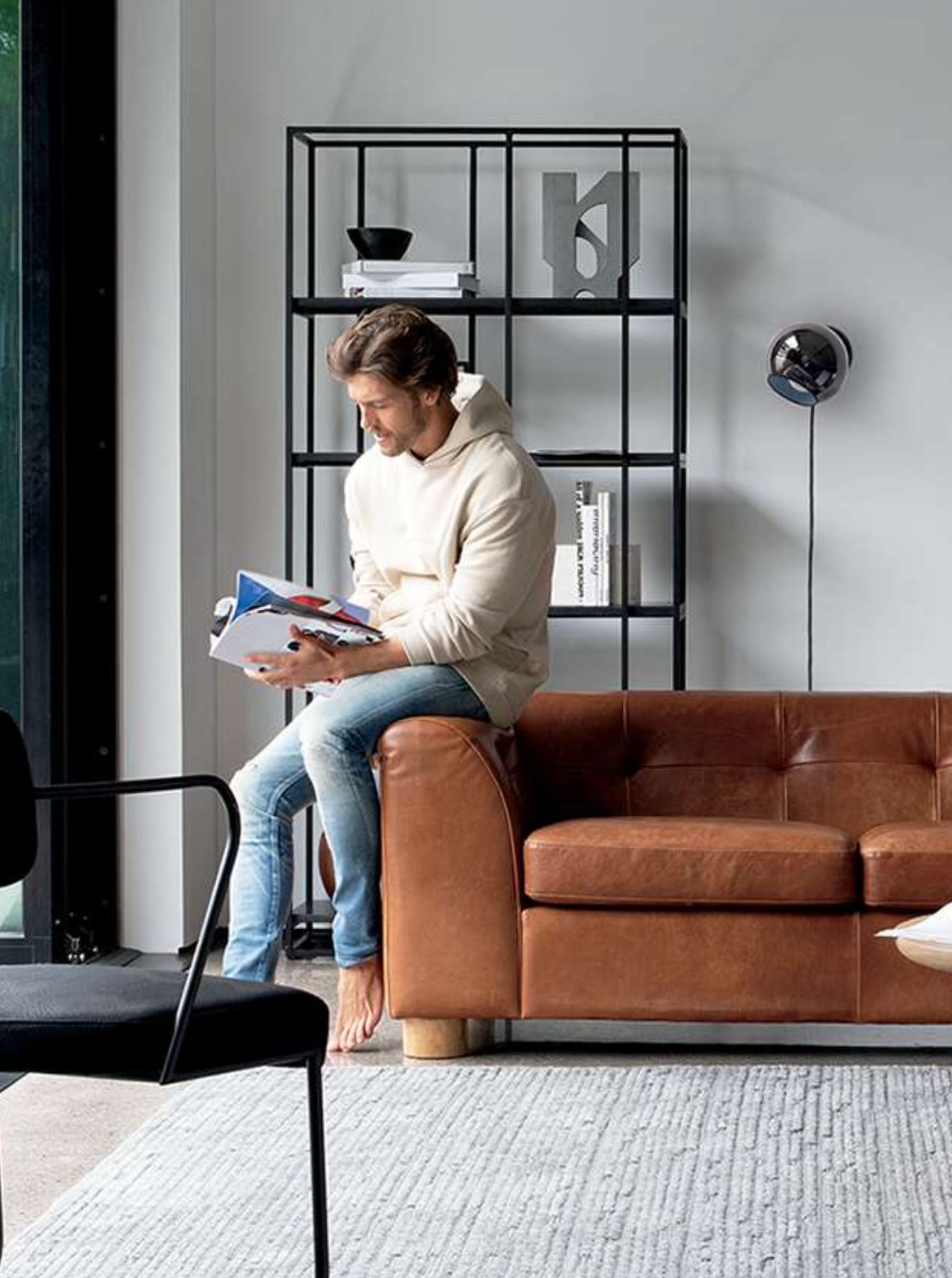
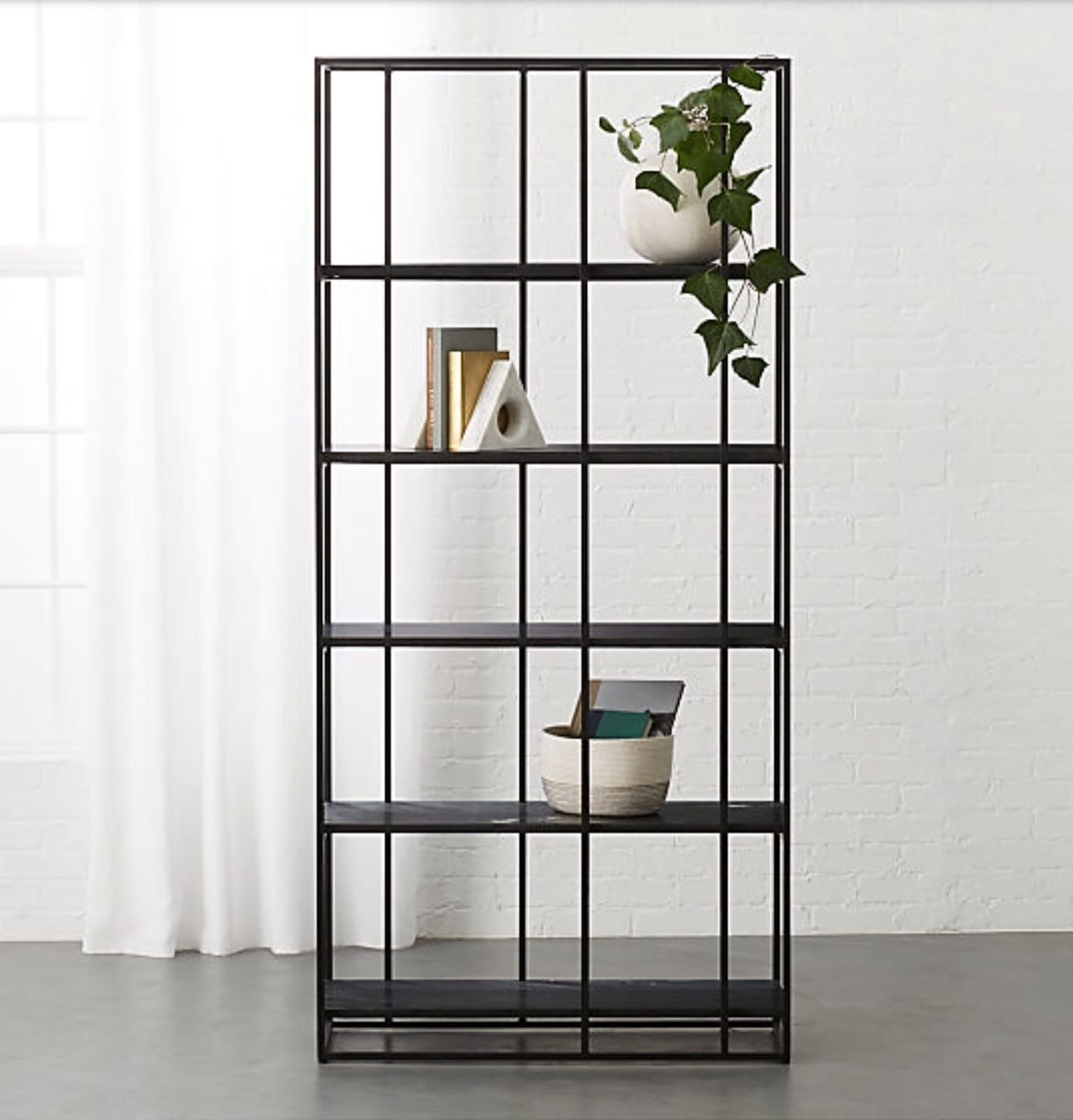
The piece was called Caged, by Spanish design firm Mermelada Estudio, its structure of welded steel beams and black Marquina marble shelves inspired by skyscrapers. My in-person scrutiny was intensified by perusing photos on the CB2 website, one showing it placed in a living room setup...
...another showing it standing on its own, its airy yet solid presence demanding that I acquire it:
Since the piece was expensive, I talked to the CB2 manager about getting the floor model at a discount, and she agreed to reserve it for me. When its showroom time was up, it was soon on its way to my home.
But disaster struck. When the delivery guy unpacked the boxes in my living room, the box with the shelves revealed five hopelessly cracked slabs of marble. At first I thought no problem: I'd call CB2 and order replacement shelves from their existing inventory. It turned out that there were no other Caged bookcases left at any CB2 whatsoever. Since the frame and the shelves were separate inventory items, I was charged for the frame alone.
I saved more money than I expected, but now I had a somewhat absurd bookcase with conspicuously missing shelves. Its black skeletal frame posed a challenge and being a resourceful type, I took it on as a design project of my own,
When I looked at the struts holding the frame together, I realized there were enough horizontal elements to already support a few things, especially if I used books as partial shelves:
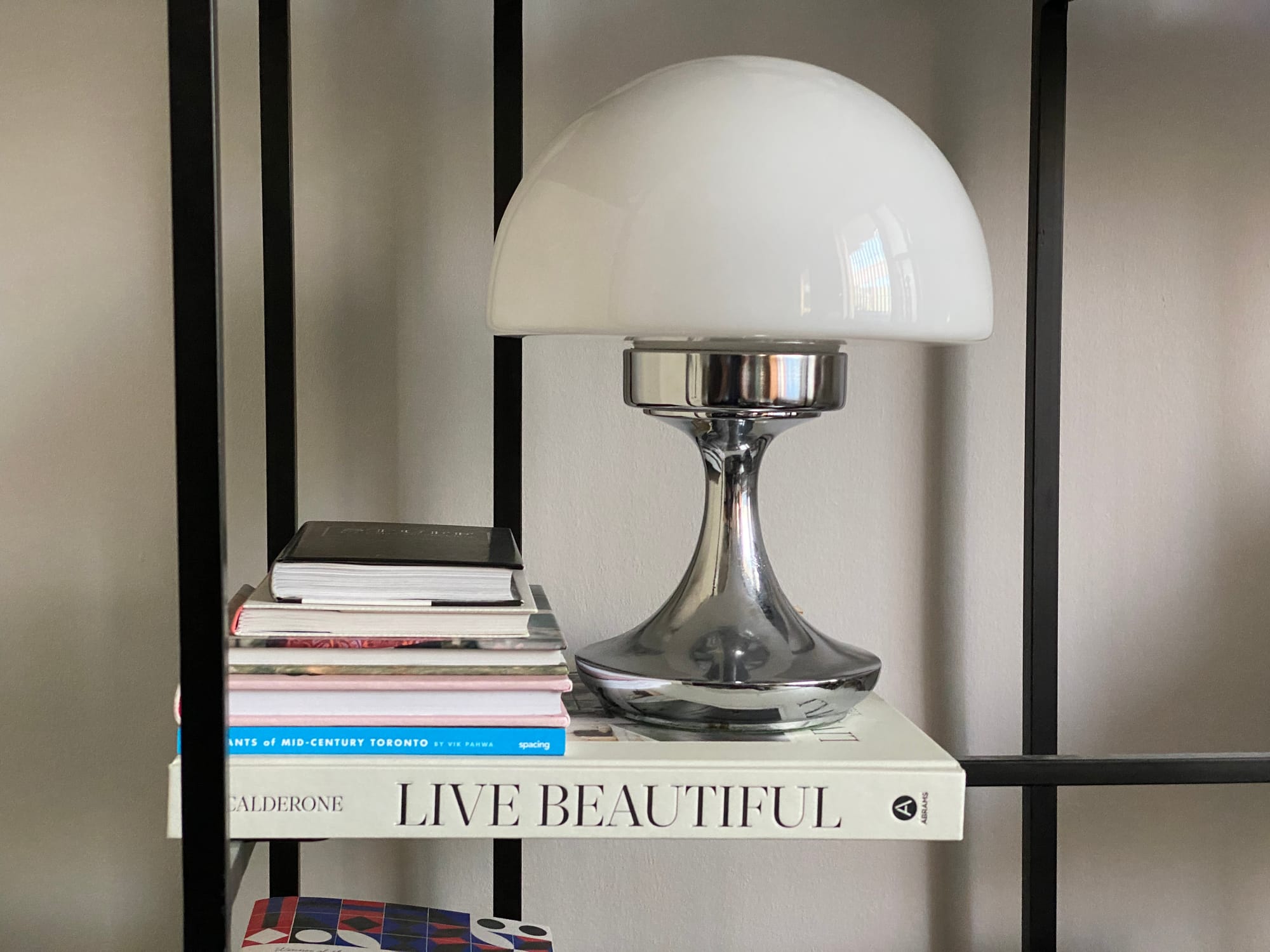
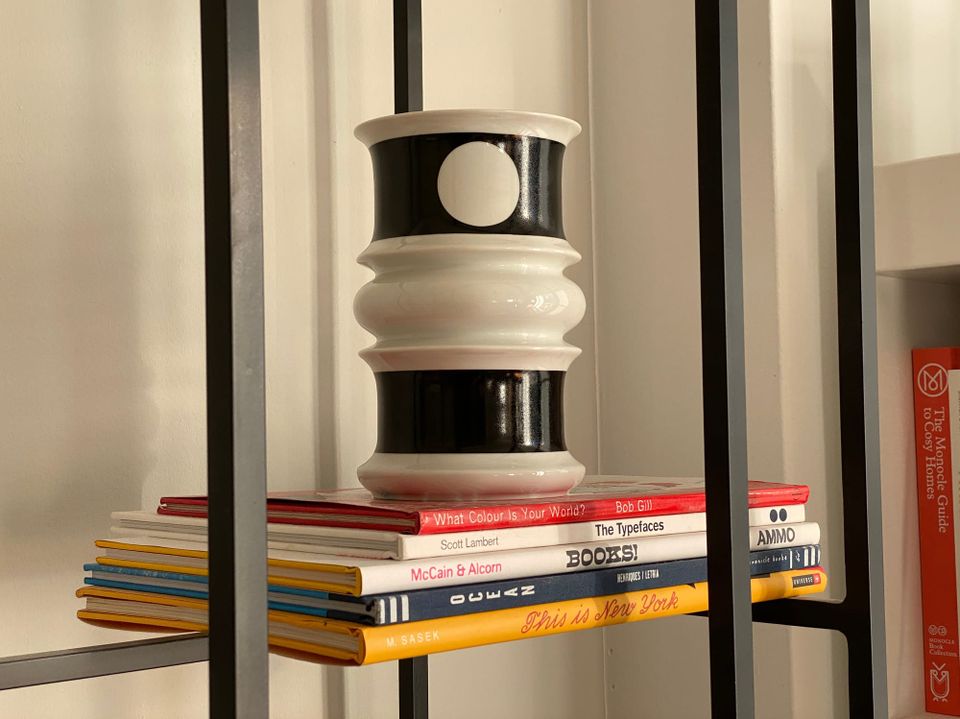
Over time, the arrangements grew, populating the empty structure with small stacks of favourite items:
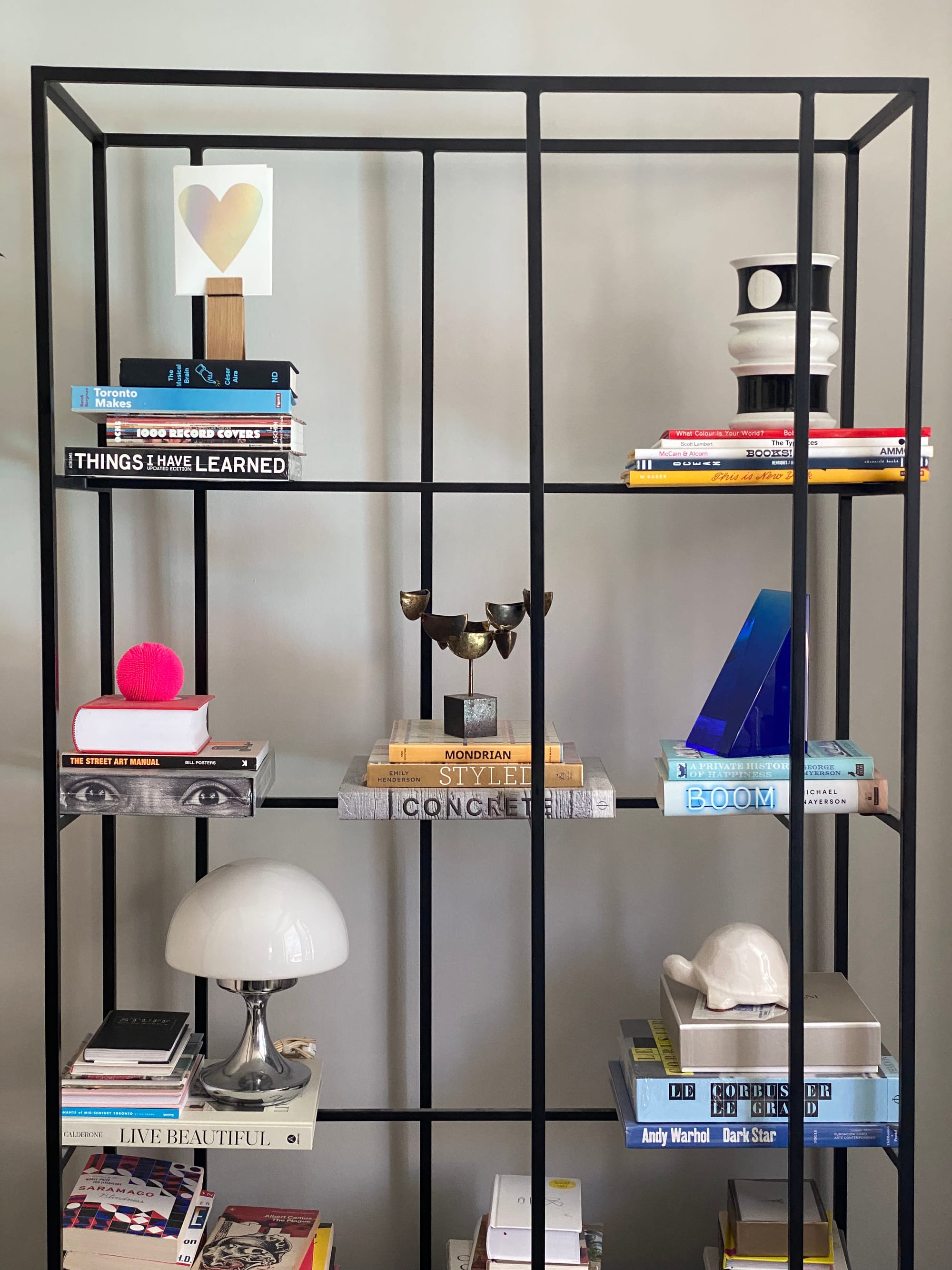
Sunlight would wash through the open spaces, casting intriguing shadows on the wall:
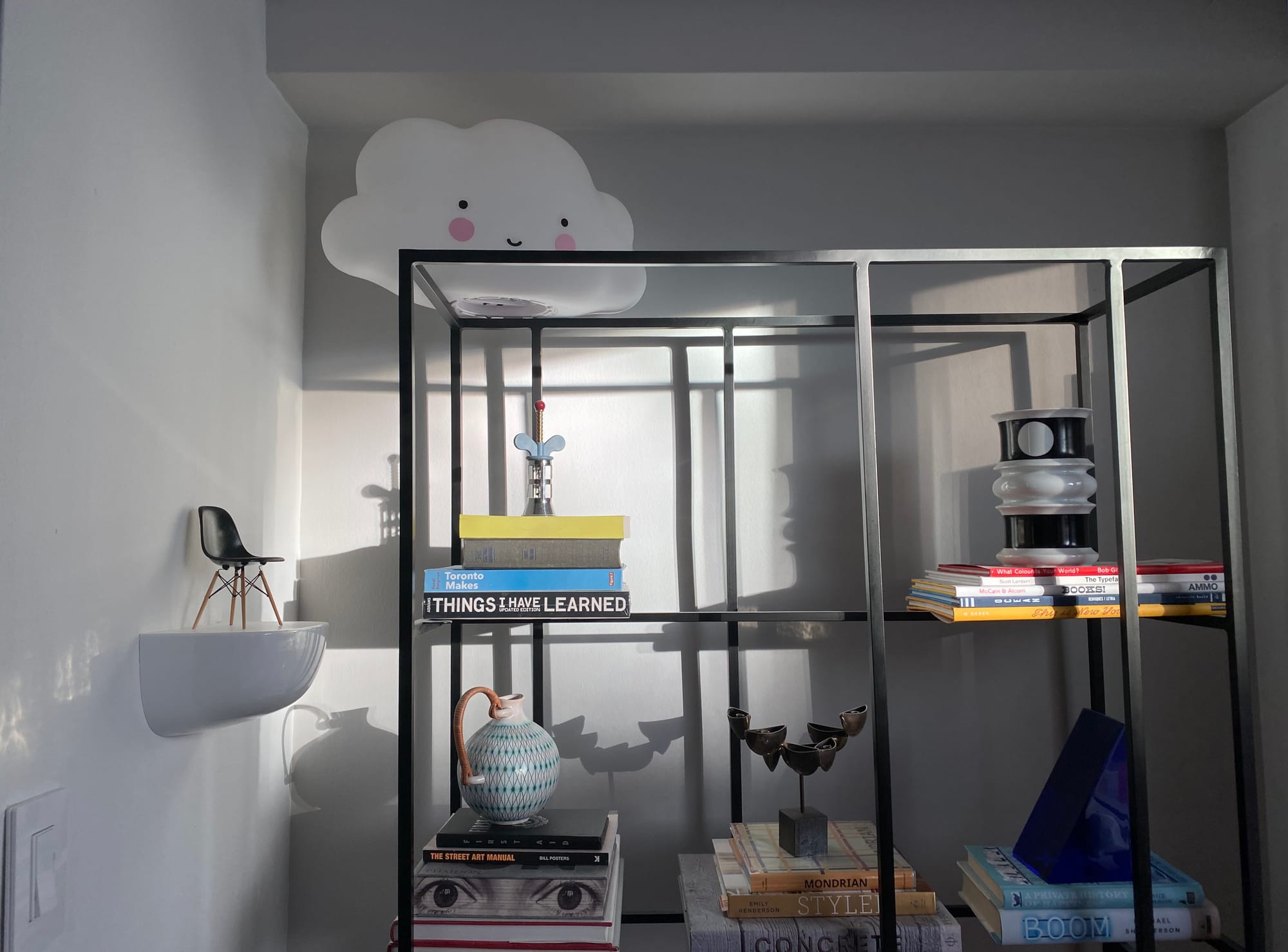
I learned to enjoy how the whole thing looked at different times of day:
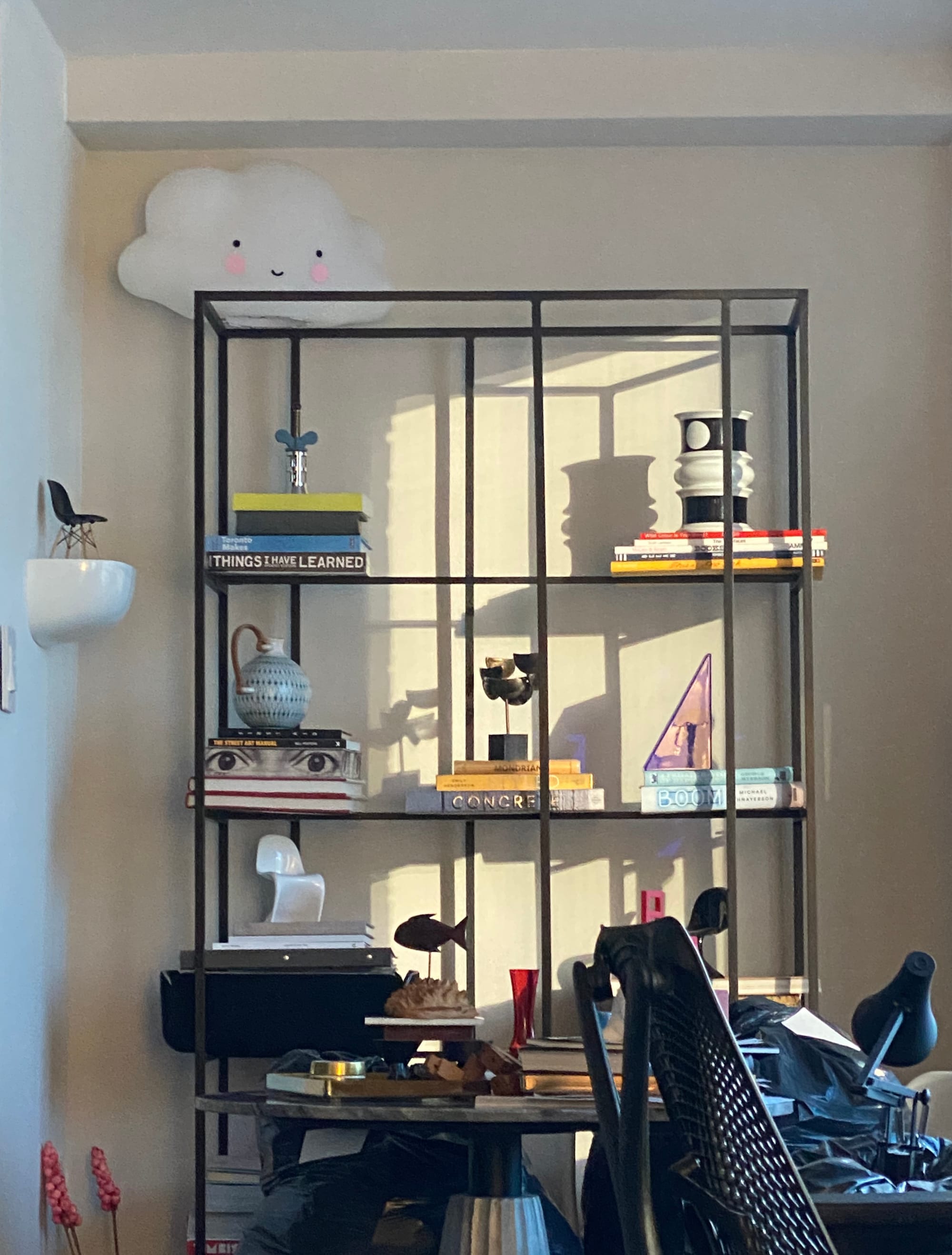
Eventually, I almost forgot that the bookcase was missing anything. Its unusual form came to seem intentional:
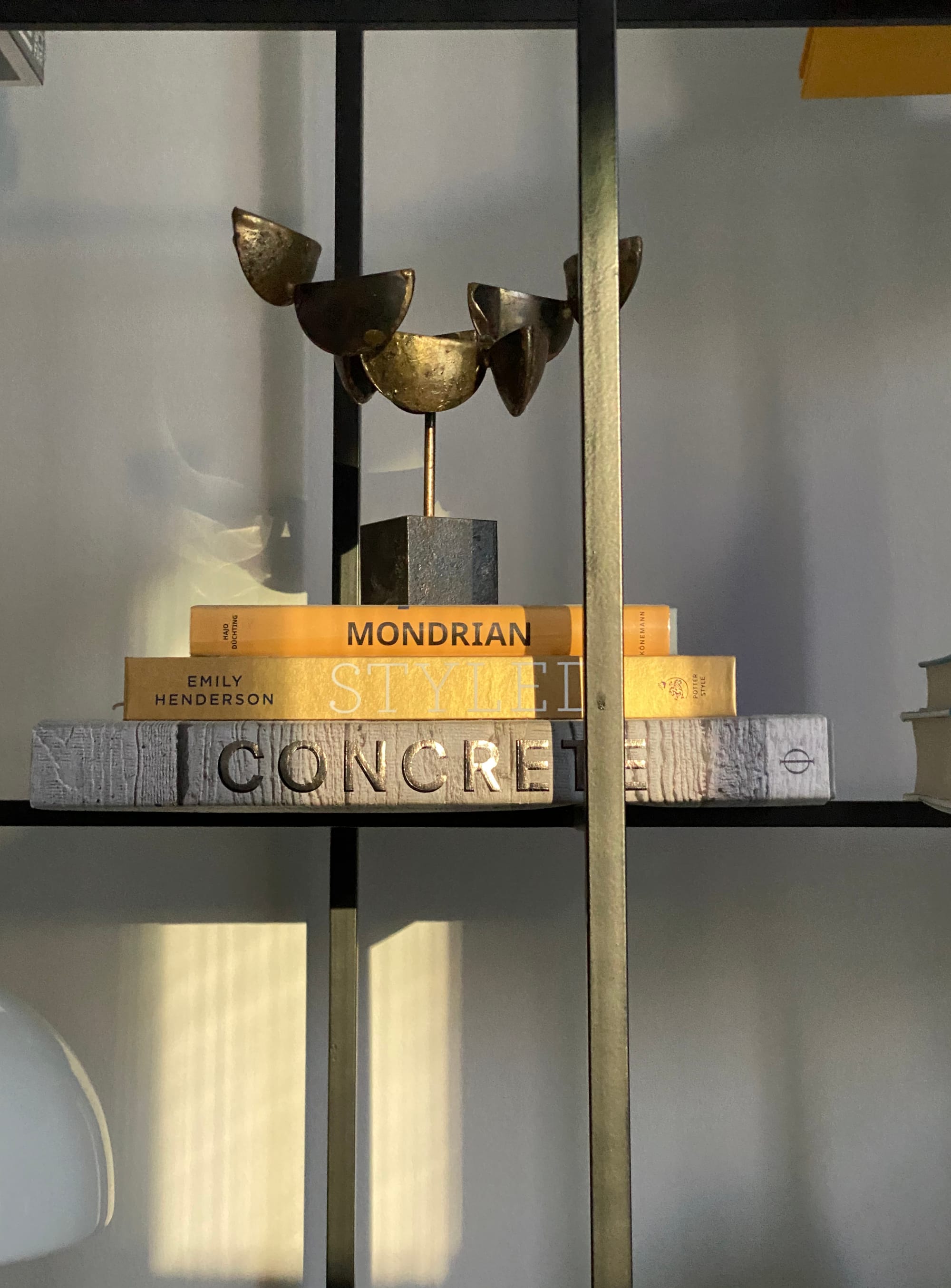
My growing collection of books and vintage objects made it impossible to keep the status quo forever. After fits and starts of figuring out shelving options, earlier this year I began the search in earnest. I wanted to match the look of Marquina marble and at the same time go with something sturdy enough to be weight bearing.
An arduous research process led me to Elegance Marble and Granite in Ajax. They'd be able to fabricate shelves using offcuts from previous projects, saving on cost. I took the GO train out to their facility and had a tour, including paging through gigantic leaning sheets of stone:
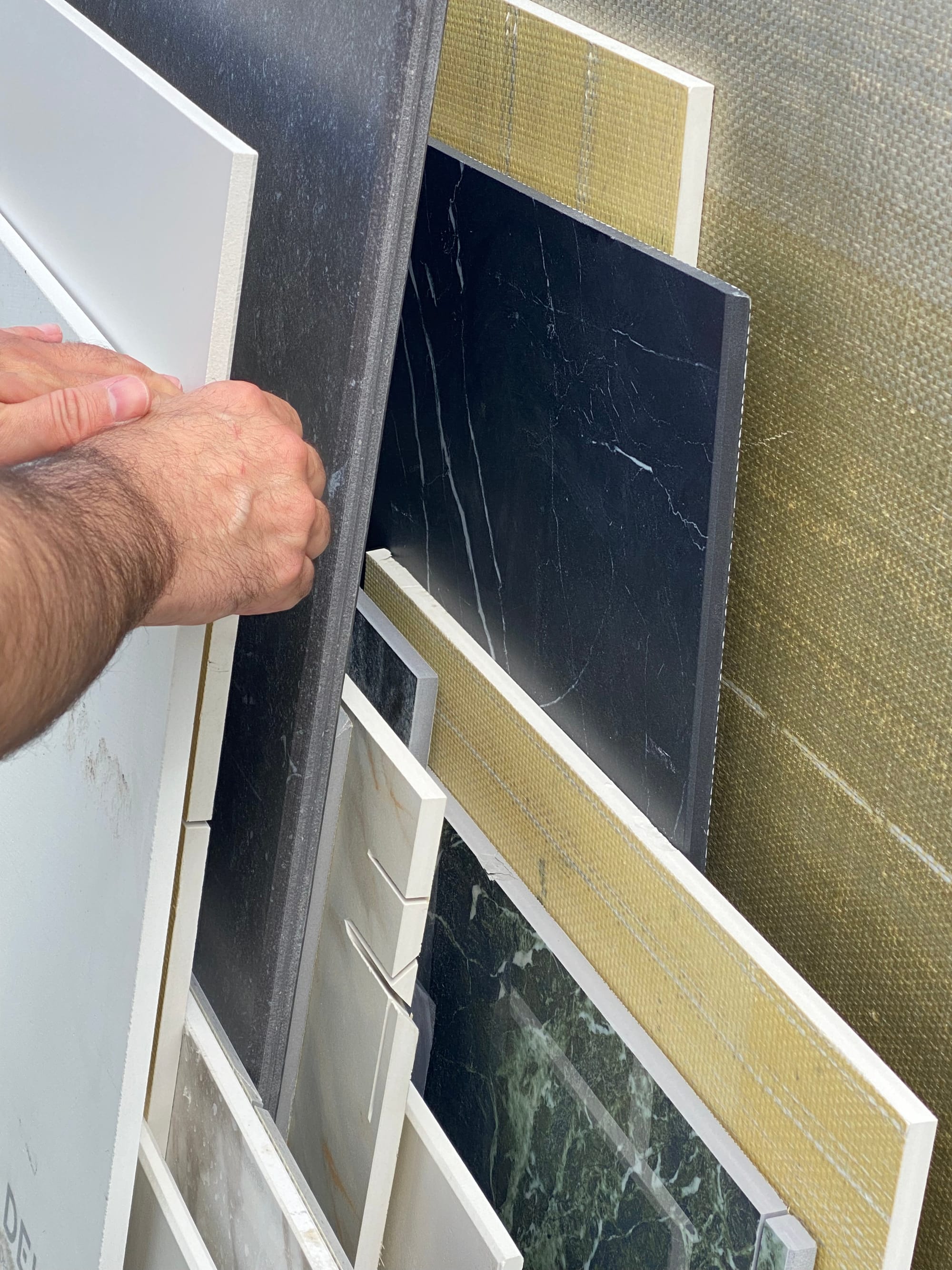
When we found something suitable, a worker used a crane to separate the sheet from its companions. Seeing it on its own made it clear it was the one to choose:
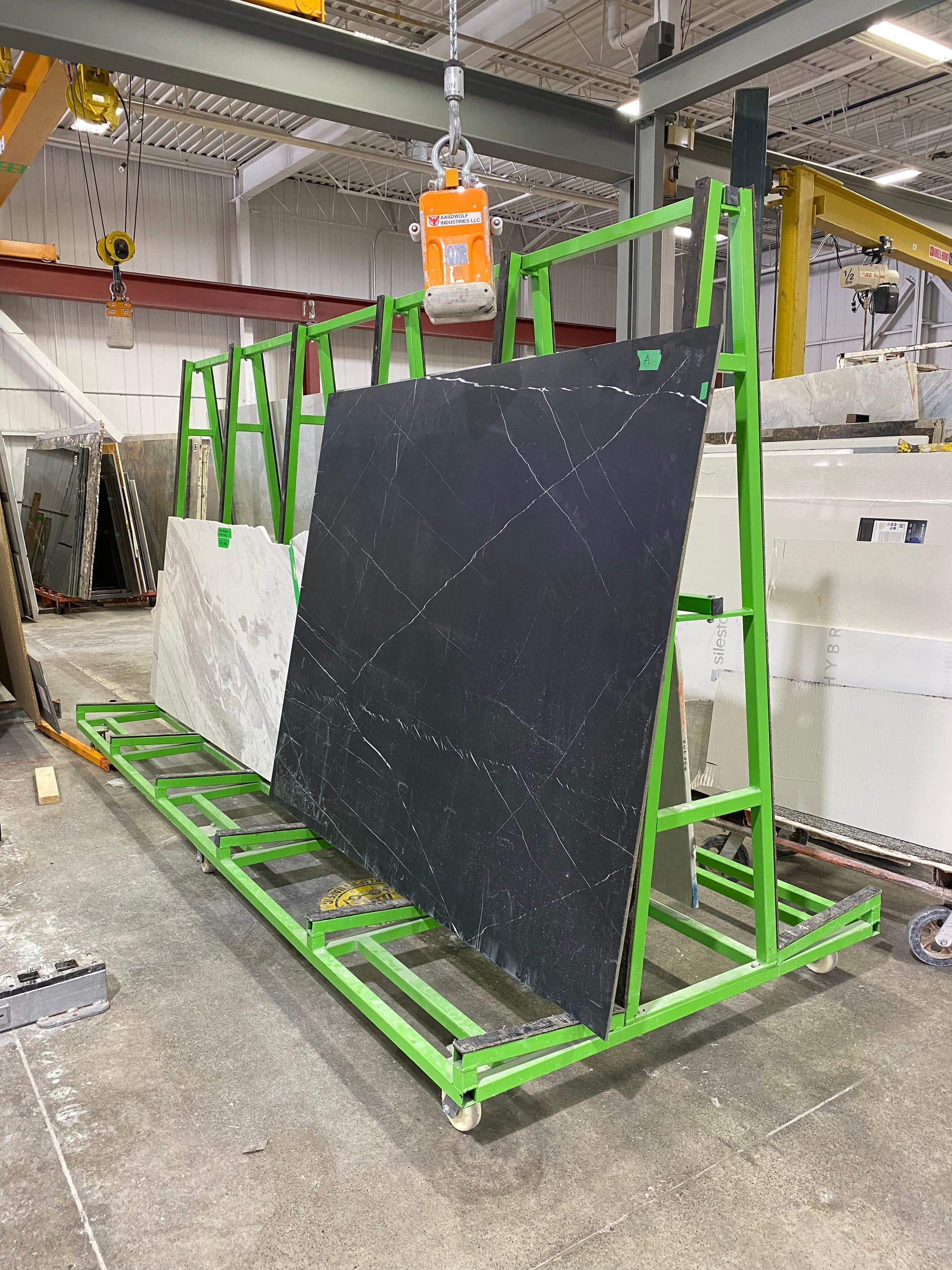
We worked out a deal and Elegance sent an expert to my apartment to measure the bookcase frame. Fabrication began. In another twist, we discovered limitations in the porcelain material chosen – it was too brittle to mitre the edges – so we had to switch to an alternative that would allow for the grain to continue onto the shelf sides. Thankfully, the switch was at no extra cost.
Finally, last Friday, an Elegance rep came by my place to install the shelves:
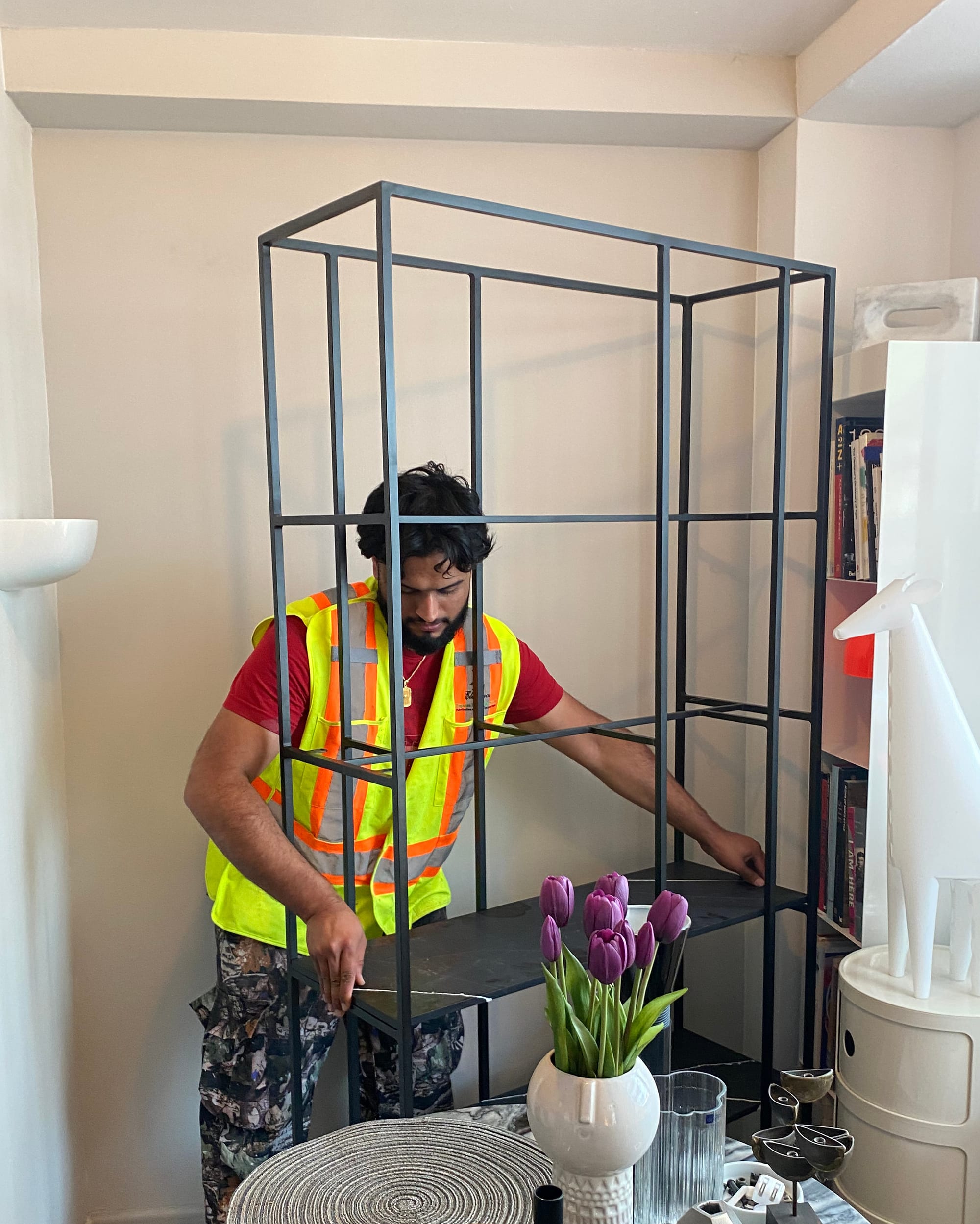
The measurements had been so exacting that no additional material was needed to fasten the slabs of quartz. They fit flawlessly.
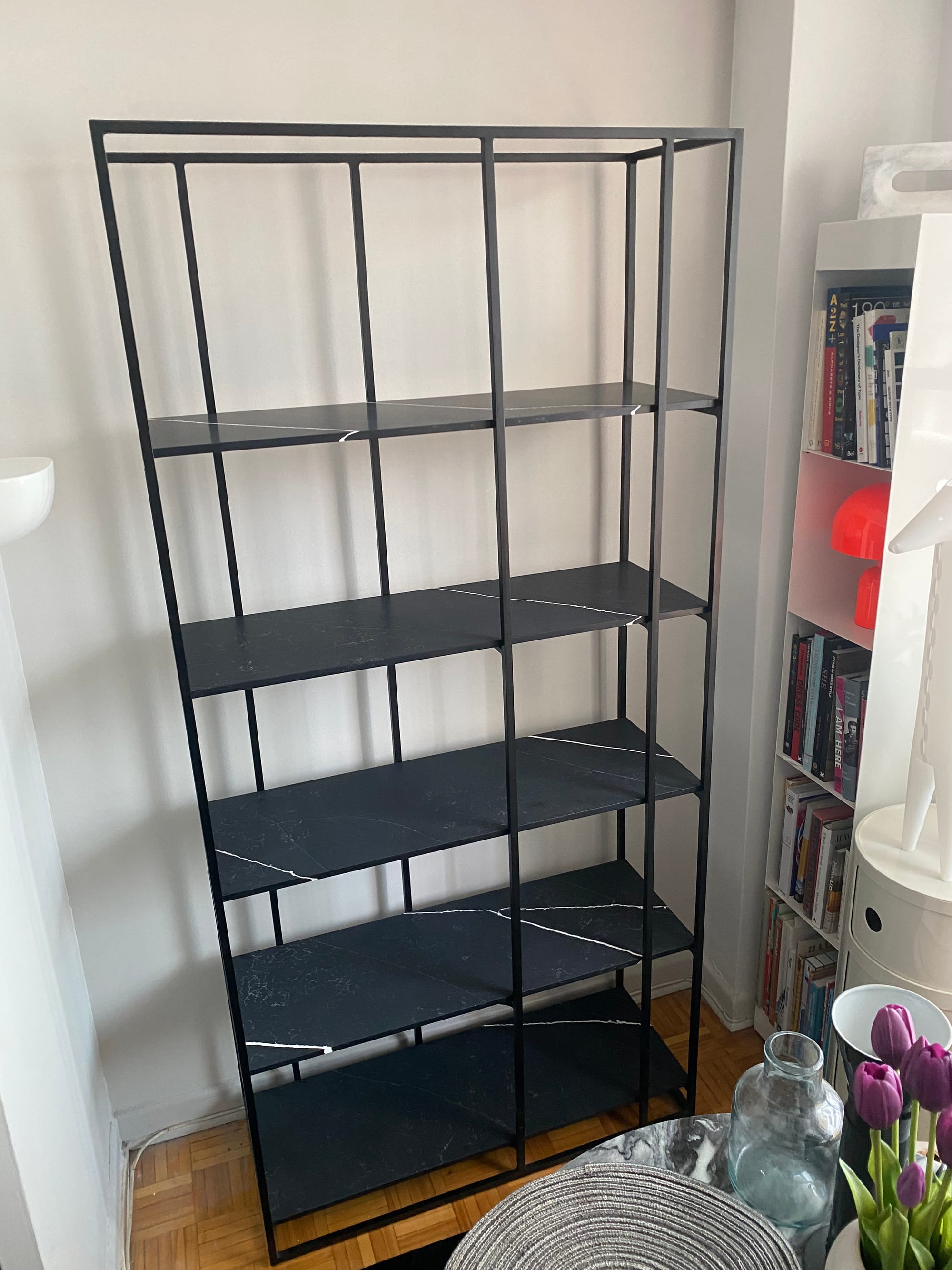
So the bookcase is now complete. Or in a way, it's beginning a new phase of its life. I'm already playing around with the expanded territory for arranging things. You'll see results in future issues.
Is there a moral to the story? I'm not sure, but I think it has something to do with moving slowly, appreciating the process, and realizing that love-at-first-sight in a shop doesn't have to mean instant success. It's the gradual unfolding that makes life so sweet.
From the archives
Slow decorating is a theme we first explored only three issues into this newsletter's existence. Dive into this article and see if you're ready to relax your pace:
 Guy Koolhof
Thank you for reading.
They can sign up here. It's published on Wednesdays.





Member discussion